
What my Dog Trainer Taught Me About Running an Interior Design Business
A little while ago, I was scrolling through a local Facebook group when a post from a dog trainer caught my eye. I wasn’t looking for a dog trainer. My dog was fine. Or so I thought.

But over the next few days, something shifted. I started noticing things I’d been tuning out: the frantic barking every time someone knocked at the door, the battles with delivery drivers, the anxious energy that had followed him home when we’d adopted him. And sure enough, a week later, I’d booked her in.
I wasn’t a warm lead. I wasn’t even a cold lead. I didn’t know I needed her services until she reminded me I had a problem worth solving.
And that, right there, is one of the most important lessons you can take into your interior design business.
Most of Your Ideal Clients Aren’t Actively Looking for You
Here’s something that surprises a lot of designers when they’re starting out: the majority of the people who will eventually hire you aren’t currently sitting at their laptop searching for an interior designer.
They’re living with a kitchen they’ve always meant to update. They’ve been putting up with a bedroom that doesn’t work for years. They’ve got a house that doesn’t quite feel like home yet, and they’ve quietly accepted that this is just how things are.
They have a problem. They just haven’t named it yet.
Your job, particularly when it comes to local marketing, is to name it for them. To show up consistently in the spaces they inhabit, talking about the problems you solve, so that when the penny drops, your name is the first one that comes to mind.
The Power of a Consistent Local Presence
The dog trainer hadn’t run a paid ad campaign or offered a flashy discount. She’d simply posted in a local Facebook group about what she does and the problems she solves. That’s it.
For interior designers running a locally based business, this kind of visibility is worth its weight in gold. It doesn’t require a big budget or a marketing agency. It requires consistency and clarity about what you actually offer.
65% of UK businesses use content marketing as part of their strategy, according to LOCALiQ’s 2026 UK State of Digital Marketing Report. You don’t need to be everywhere; you just need to show up somewhere, regularly, with something worth saying.
When you post consistently about what you do, the projects you’re working on, the problems you solve and the transformations you create, you’re doing something more powerful than advertising. You’re planting seeds.
What This Actually Looks Like in Practice
You don’t need to post a polished brochure every week. What works is showing people what it’s like to work with you, what you notice that others don’t, and what life looks like on the other side of a project.
Some ideas to get you started:
- Share a before-and-after of a client project, with a few sentences about the brief and what you solved
- Post about a common problem you see in homes in your area (open-plan living that doesn’t flow, spare rooms that never get used, that kind of thing)
- Talk about your process: what happens on a first consultation, what clients are often surprised by
- Show up in local community groups, not to sell, but to be visible, helpful and recognisable
- Ask happy clients to leave reviews, and share those reviews (with permission)
None of this is complicated. But it does require you to show up before the phone rings, rather than waiting until it does.
Marketing Is a Slow Burn, and That’s Okay
I didn’t book the dog trainer the day I saw her post. It took a week of my brain quietly working on the problem before I picked up the phone. That’s completely normal.
People rarely make big purchasing decisions the moment they first encounter a business. They need to see your name a few times, feel like they know a bit about you, and trust that you’re the real deal before they reach out. The marketing you do today is building the pipeline for three, six, even twelve months from now.
This is especially true for interior design, where projects involve significant investment and a real level of trust. Clients want to feel like they already know you a little before they invite you into their home.
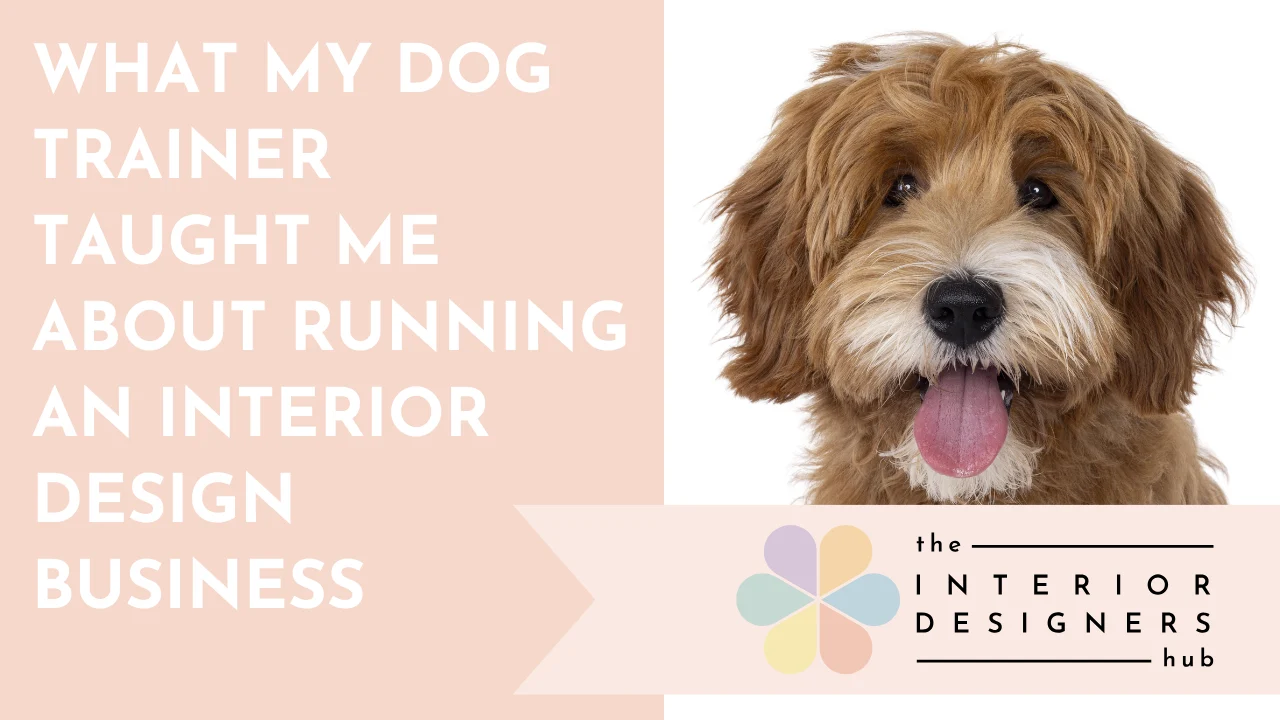
Oh, and in case you were wondering — did it work? Well, just look at his little face. Butter wouldn’t melt, right?

So, What Does This Mean for Your Interior Design Business?
It means your job isn’t just to be brilliant at design (though that matters, obviously). Your job is also to make sure the right people know you exist.
Somewhere out there is a homeowner who has been living with a sitting room that’s never quite worked. They’re not searching for an interior designer today. But if they see your name pop up enough times in the right places, talking about exactly the kind of problem they have, one day they will be.
You just need to make sure you’re already there when they go looking.
Ready to Take the Next Step?
If this post has got you thinking about how you market your interior design business, a useful read next is this blog post below. It digs into some of the most common reasons designers struggle to get traction with their marketing, and what to do differently. Whether you’re just starting out or you’ve been in business a while, there’s a good chance something in there will resonate:

Last Reviewed: April 2026
References
LOCALiQ, 2026. UK State of Digital Marketing Report 2026. [online] Available at: https://localiq.co.uk/blog/uk-digital-marketing-statistics [Accessed: 1 April 2026]
About the Author

Kate Hatherell is the founder of The Interior Designers Hub and a qualified interior design professional with extensive experience in the industry. She has helped hundreds of people transition into successful interior design careers through the Hub’s Ofqual-regulated Level 3 Diploma in Professional Interior Design and a range of business training and mentoring programmes.
Kate serves as a consultant and professional advisor to AIM Qualifications and Assessment Group, contributing specialist industry expertise to the development of new interior design qualifications across the UK. She also delivers SketchUp training to students around the world, and is committed to providing practical, industry-relevant education that prepares designers for real-world careers and thriving businesses.